Diamond clarity refers to the presence of imperfections, both on the surface and within the diamond. These imperfections can include blemishes, which are surface flaws, and inclusions, which are internal defects. Clarity grading assesses the size, number, location, and visibility of these imperfections.
Most diamonds have imperfections that are not visible to the naked eye, and do not impact their beauty. Gemologists use magnification, and specific criteria to evaluate the clarity of a diamond. The clarity grade assigned to a diamond, indicates the level of imperfections present, with higher clarity grades indicating fewer and smaller imperfections.
All diamonds have unique characteristics, and natural inclusions and blemishes are a natural part of their formation. These characteristics give each diamond its individuality, and are considered part of its natural beauty. While higher clarity grades are generally more valuable, it ultimately comes down to personal preference and budget, when selecting a diamond with the desired level of clarity.
Quick Clarity Tips
Here are some additional points to consider when it comes to diamond clarity:
The term "eye clean" is subjective and varies from person to person. Some individuals may be more sensitive to inclusions, and prefer a higher clarity grade, while others may not mind slight inclusions, as long as they are not visible to the naked eye.
The location and type of inclusions can also impact the visibility, and overall appearance of a diamond. Inclusions that are located near the center, or on the table of the diamond, are more likely to be noticeable than those near the edges, or under the diamond's setting.
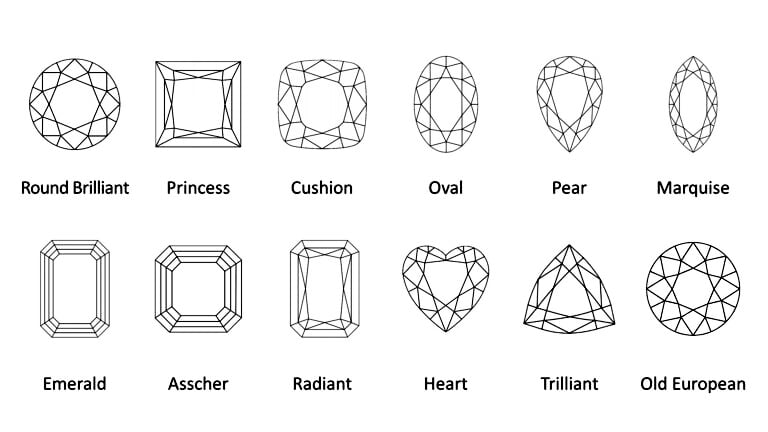
Diamond shape and cut, can affect the visibility of inclusions. Some diamond shapes, such as round brilliant, hide inclusions better than others, while fancy-shaped diamonds, may have more visible inclusions due to their open facets and step-cut designs.
It's important to strike a balance between clarity, and other factors such as cut, color, and carat weight. Depending on your priorities, you may choose to allocate more of your budget towards a higher clarity grade, or focus on other aspects that are more important to you.
Ultimately, the choice of diamond clarity is a personal decision, based on your preferences and budget.
FIND YOUR DIAMOND
Diamond Clarity Spans 6 Categories With A Total Of 11 Clarity Grades
The GIA diamond grading system and clarity scale are widely used in the diamond industry. The clarity scale consists of 6 categories that assess the presence and visibility of inclusions, and blemishes within a diamond. These categories are further divided into a total of 11 clarity grades. The clarity grades, in ascending order, are as follows:
Flawless (FL):No inclusions or blemishes visible under 10x magnification.
Internally Flawless (IF):No inclusions visible under 10x magnification, but may have minor blemishes.
Very, Very Slightly Included (VVS1, VVS2):Inclusions are extremely difficult to see under 10x magnification.
Very Slightly Included (VS1, VS2):Inclusions are difficult to see under 10x magnification.
Slightly Included (SI1, SI2):Inclusions are noticeable under 10x magnification but may not be visible to the naked eye.
Included (I1, I2, I3):Inclusions are visible to the naked eye and may affect the diamond's transparency and brilliance.
Each clarity grade represents a range of inclusions and their visibility. The clarity grade of a diamond is determined by trained gemologists, who assess the diamond under controlled lighting conditions and with magnification.
It's important to note that diamonds with clarity grades in the VS and SI range, are still considered to be of high quality and offer excellent value, as the inclusions are often not visible to the naked eye. The choice of clarity grade, depends on personal preference, budget, and the overall appearance of the diamond.
Flawless (FL) Diamonds
Inclusions and blemishes aren’t visible on flawless diamonds, even under 10x magnification. Less than 1% of all diamonds are FL clarity. A flawless diamond is incredibly rare because it's nearly impossible to find a diamond 100% free of inclusions.
Flawless (FL) diamonds are exceptionally rare and highly valued in the diamond industry. These diamonds have no internal or external characteristics, meaning they are free from inclusions and blemishes, even when examined under 10x magnification. It is extremely difficult to find a diamond that is completely flawless, which is why FL diamonds represent less than 1% of all diamonds.
The absence of inclusions and blemishes in FL diamonds, allows for maximum light reflection and enhances the diamond's brilliance. These diamonds are highly sought after for their purity and rarity. However, it's important to note that diamonds with slightly lower clarity grades, such as internally flawless (IF) or very, very slightly included (VVS) grades, may offer similar visual appeal, and represent excellent value for those seeking a high-quality diamond without the premium price associated with FL diamonds.
A flawless diamond is very rare, because it’s nearly impossible to find a diamond 100% free of inclusions.
Less than 1% of all diamonds carry an FL clarity
No internal or external inclusions & characteristics
VVS1, VVS2 Very, Very Slightly Included (VVS) Diamonds Very, Very Slightly Included (VVS) diamonds, are graded as having minuscule inclusions that are extremely difficult to see, even for trained gemologists, under 10x magnification. VVS diamonds offer a high level of clarity, and have an eye-clean appearance, meaning that no inclusions can be seen with the naked eye.
VVS clarity is considered rare, and represents a high-quality diamond. Within the VVS category, there are two subgrades: VVS1 and VVS2.
VVS1 diamonds have slightly fewer and smaller inclusions than VVS2 diamonds, but both grades are characterized by their tiny and difficult-to-see inclusions.
Choosing a VVS clarity diamond, ensures that you are getting a diamond with exceptional clarity, and minimal visible inclusions, allowing for maximum brilliance and sparkle.
VVS diamonds have minuscule inclusions that are difficult even for trained eyes to see under 10x magnification
VS1, VS2 Very Slightly Included (VS) Diamonds Very Slightly Included (VS) diamonds, have minor inclusions that range from difficult (VS1), to somewhat easy (VS2) to see under 10x magnification. While the inclusions in VS diamonds may be visible under magnification, they are still considered minor and do not significantly impact the diamond's overall appearance.
VS1 is a higher clarity grade than VS2, indicating that the inclusions in a VS1 diamond are slightly less visible than those in a VS2 diamond. However, both grades still offer excellent value and are considered to be of high quality. VS clarity diamonds are a popular choice among buyers, as they strike a good balance between clarity and price.
Choosing a VS clarity diamond, allows you to have a beautiful diamond, with minor inclusions that are not visible to the naked eye. This allows for a stunning appearance, and ensures great value for your purchase.
Great value.
Minor inclusions ranging from difficult (VS1) to somewhat easy (VS2) to see at 10x magnification
SI1, SI2 Slightly Included (SI) Diamonds
Slightly Included (SI) diamonds, have inclusions that are noticeable under 10x magnification. While these inclusions may be visible under magnification, SI diamonds can still offer great value, especially if they are eye clean, meaning the inclusions are not visible to the naked eye.
SI1 diamonds generally have inclusions that are sometimes visible to the very keen eye without magnification, but they can still be considered eye clean, depending on the specific characteristics of the diamond. SI2 diamonds, on the other hand, may have inclusions that are more easily detectable, especially when viewed from the side, or from the pavilion (lower portion) of the diamond.
Choosing an SI clarity diamond, can be an excellent option if you are looking for a balance between value and quality. While the inclusions may be visible under magnification, they often do not detract significantly from the overall beauty of the diamond when viewed with the naked eye.
eye clean, SI diamonds are often the best value
Inclusions are noticeable at 10x magnification
SI2 inclusions may be detectable to a very keen unaided eye, especially when viewed from the side
I1, I2, I3 Included Diamonds
Included (I) clarity diamonds. have inclusions that are more obvious and likely to be visible, which can impact the overall beauty of the diamond. (I) clarity diamonds may have inclusions that are visible to the naked eye, especially in the case of I2 and I3 clarity grades. These diamonds often have more, significant inclusions, that can affect the transparency and sparkle of the stone.
Lovinity™ does not sell loose diamonds with (I) clarity grades. It's important to note that the visibility and impact of inclusions, can vary within the (I) clarity range, so it's always recommended to carefully evaluate the specific characteristics, and appearance, of individual diamonds before making a purchase.
When considering (I) clarity diamonds, it's crucial to view the stone in person, or review detailed images and descriptions, to assess the visibility and impact of the inclusions. The pricing of (I) clarity diamonds is generally lower, compared to higher clarity grades, making them more affordable options for those with budget constraints.
The Five Diamond Clarity Factors
The five diamond clarity factors play a significant role in determining the clarity grade of a diamond. These factors are:
Number:The number of easily visible characteristics or inclusions, also influences the clarity grade. Diamonds with fewer characteristics, generally receive a higher clarity grade.
Nature:The nature of the inclusion, refers to the type of characteristic, and its impact on the diamond's durability. Certain types of inclusions may have a more significant effect on the overall clarity grade.
Size:The size of a characteristic or inclusion within a diamond, can affect its clarity grade. Larger or more noticeable characteristics, typically result in a lower clarity grade.
Position:The position of a characteristic within the diamond, can impact its clarity rating. Characteristics located under the table (the top flat facet), and close to the pavilion (the bottom portion of the diamond), are more visible and can have a greater impact on the clarity grade.
Color and Relief:Color and relief refer to how easily a characteristic is seen, and the contrast it creates within the diamond. Characteristics that have high visibility or significant contrast with the surrounding diamond, may lower the clarity grade.
Considering these factors, helps gemologists and diamond graders determine the appropriate clarity grade for a diamond, taking into account the size, number, position, nature, color, and relief of its characteristics.
Diamond Shape Effects on Clarity
The shape of a diamond can indeed affect the visibility of inclusions and the required clarity grade. Here are some considerations for different diamond shapes:
Step Cut Shapes (Emerald, Asscher):Step cut diamonds, have rectangular facets that create a mirror-like effect. This transparency can make inclusions more visible, so a higher clarity grade is recommended. For these shapes, choosing a clarity grade of VS1 or better ensures that the inclusions will not be easily visible.
Brilliant Cut Shapes (Round, Princess, Oval, Marquise, Pear, Heart):These shapes have a brilliant facet pattern that reflects light from multiple angles, which naturally hides many inclusions. As a result, these shapes may not require as high of a clarity grade. A lower clarity grade, such as SI1 or SI2, can still provide an eye-clean appearance.
It's important to note that personal preferences, and individual tolerance for visible inclusions may vary. Ultimately, it is recommended to determine the desired clarity grade based on your preferences and budget.
Sizing Up Clarity
Smaller diamonds tend to have smaller facets, which can make inclusions and blemishes less noticeable to the naked eye. However, as you move up in carat weight and the size of the diamond increases, the characteristics within the diamond may become more visible. Therefore, diamond clarity becomes an important consideration when choosing larger diamonds. It's important to find the right balance between carat weight and clarity, to ensure that you have a diamond that meets your desired size, while still maintaining a good level of clarity and overall appearance.
Diamond Size
As the size of a diamond increases, the facets on the diamond also increase in size. This can make inclusions more visible, as larger facets allow more light to enter, and reflect within the diamond. Therefore, when choosing a larger diamond, it is generally recommended to prioritize a higher clarity grade, to ensure that any inclusions are not easily visible to the naked eye. A higher clarity grade will help maintain the diamond's overall beauty, and minimize the impact of any potential inclusions.
How Many Different Types Of Diamond Inclusions And Blemishes Are There
There are various types of inclusions and blemishes that can be found in diamonds. Here are some common ones:
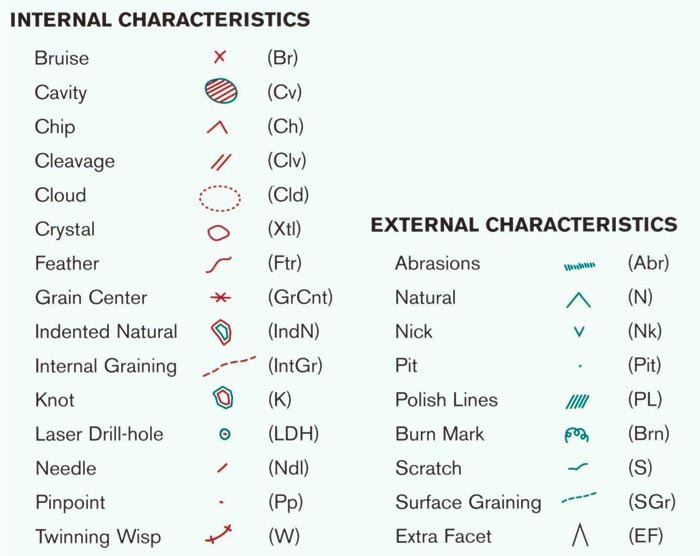
Types Of Diamond Inclusions
Crystal Inclusions: Small mineral crystals trapped inside the diamond.
Feather: A crack or fracture within the diamond that resembles a feather.
Pinpoint: Tiny, pinpoint-sized crystals or mineral inclusions.
Cloud: A cluster of multiple tiny inclusions that create a hazy or cloudy appearance.
Needle: Very thin, needle-like inclusions within the diamond.
Knot: A diamond crystal that extends to the surface of the stone.
Chip: A small area of the diamond that has been chipped or damaged.
Cavities: Small holes or voids within the diamond.
Included Crystal: Larger or more noticeable mineral crystals within the diamond.
Internal Graining: Lines, streaks, or patterns caused by irregular crystal growth.
Types Of Blemish Examples
Scratches: Surface scratches caused by wear or improper handling.
Polish Lines: Fine lines left on the diamond's surface during the polishing process.
Nicks: Small chips or notches on the diamond's edges.
Extra Facets: Additional facets created during the cutting process.
Pit: A small depression or cavity on the diamond's surface.
Polish Marks: Visible polishing marks on the diamond's surface.
Girdle Roughness: Rough areas or unevenness along the diamond's girdle.
Abrasions: Surface abrasions caused by friction or wear.
Burn Marks: Damage or discoloration caused by excessive heat during jewelry repair or setting.
Luster Lines: Thin lines or marks on the diamond's surface affecting its luster.
How to interpret a plot on a GIA diamond report.
Interpreting a plot on a GIA (Gemological Institute of America) diamond report, can provide valuable insights into the characteristics and clarity of the diamond. Here's how to read and understand a diamond plot:
The Plot's Position:The plot will be located on the diamond grading report, and typically appears as a simple diagram. It will have two sides – the left side represents the diamond from the crown view (looking down on the diamond from the top), and the right side represents the diamond from the pavilion view (looking up at the diamond from the bottom).
Inclusions and Blemishes:The plot shows the diamond's internal characteristics, called inclusions, and external characteristics, called blemishes. Inclusions are natural imperfections inside the diamond, such as crystals, feathers, or clouds. Blemishes are surface irregularities like scratches, chips, or polish marks.
Shape and Size:The inclusions and blemishes on the plot are represented by various symbols, each indicating a different type and location of the imperfection. Common symbols used are dots, lines, clouds, feathers, or crystals. The size of the symbol may give you an idea of the relative size of the inclusion or blemish.
Clarity Grading:The plot is an essential tool for the diamond grader to determine the diamond's clarity grade. Based on the number, size, nature, and position of the inclusions and blemishes, the grader assesses the diamond's overall clarity grade on the GIA scale, ranging from Flawless (no inclusions or blemishes visible under 10x magnification) to Included (inclusions visible to the naked eye).
Uniqueness of Each Diamond:As mentioned earlier, every diamond has its unique plot, just like a fingerprint. Two diamonds with the same clarity grade, may have entirely different plots, indicating their distinct internal and external characteristics.
Importance of Clarity:While the clarity grade is crucial for a diamond's overall quality, it's essential to note that diamonds with inclusions that do not affect their beauty or structural integrity, can still be highly attractive and valuable.
Understanding the plot on a GIA diamond report can provide you with valuable information about the diamond's clarity characteristics. It is one of the factors to consider when evaluating a diamond's overall quality and making an informed purchasing decision.
Translation plane This is how plots are traditionally oriented. Note that the feather in bezel #1 also breaks through the girdle to the upper half on the left #1 lower half.
Diamond Clarity FAQ Which shapes can hide diamond clarity flaws?
Round, cushion, and oval diamonds, with their multiple facets and brilliant cut, are known for their ability to hide clarity flaws well. The faceting pattern, and the way light interacts with these diamond shapes, help to minimize the visibility of inclusions and blemishes, making them appear less noticeable to the naked eye. This can be advantageous when considering diamonds with lower clarity grades.
Is diamond clarity very important?
While the cut of a diamond is widely regarded as the most important factor, in determining its overall beauty, clarity is also an important consideration, especially in larger stones or diamonds with less brilliant faceted cuts. In such cases, the presence of inclusions or blemishes, may be more visible and can impact the overall appearance of the diamond. However, the importance of clarity can vary depending on personal preferences, and individual diamond characteristics. Some people may prioritize a higher clarity grade, while others may be more forgiving of minor inclusions, as long as they are not easily visible to the naked eye. Ultimately, it is a matter of finding the right balance between cut, clarity, color, and carat weight based on your preferences and budget.
How are diamond inclusions formed?
Diamond inclusions are formed during the natural process of diamond formation, which occurs deep within the Earth's mantle, under high temperature and pressure conditions. Various factors can contribute to the formation of inclusions, such as:
Crystallization:During the growth of a diamond crystal, mineral impurities or other foreign materials may become trapped within the crystal lattice, resulting in internal inclusions.
Internal Stress:The intense pressure and temperature during diamond formation, can lead to the development of internal stress within the crystal, causing fractures or dislocations that manifest as inclusions.
External Contamination:External factors, such as fluids or gasses, can infiltrate the diamond's structure during its growth, creating inclusions.
Inclusions can take various forms, including minerals, fractures, clouds, needles, or crystals. Each inclusion is unique, and contributes to the individuality of a diamond. Diamond grading laboratories, evaluate and assess the size, type, location, and visibility of inclusions to determine the clarity grade of a diamond.
Can inclusions be seen without magnification? Inclusions in diamonds can range in size and visibility. In lower clarity grades, such as I2 and I3, the inclusions are more noticeable, and may be visible to the naked eye without magnification. These inclusions can impact the overall appearance and beauty of the diamond.
As you move up the clarity scale towards higher grades, such as VS (Very Slightly Included) or VVS (Very, Very Slightly Included), the inclusions become smaller and more difficult to see without magnification. Inclusions in these higher clarity diamonds are typically only visible, under 10x magnification by a trained jeweler using a loupe or microscope.
The visibility of inclusions, also depends on their type, size, location, and the individual's visual acuity. Some inclusions may be more noticeable, or easily visible even in higher clarity grades, while others may be less visible or even invisible to the naked eye.